
The Swedish electoral system
...and how we can significantly improve it!

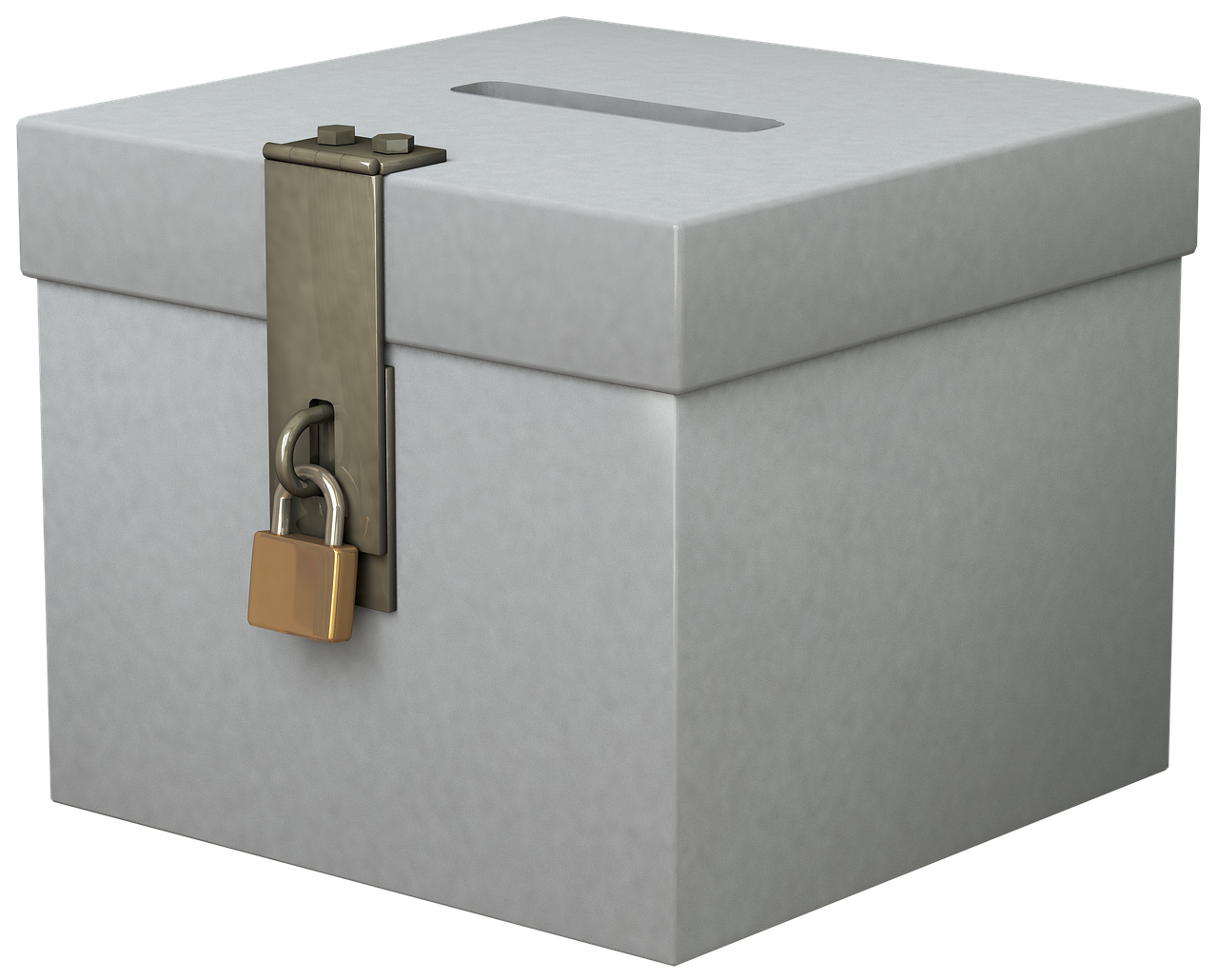
As adults, you and I should reasonably be able to manage well on our own without being forced to obey guardians in the form of politicians. Unfortunately, our opinion is not shared by the majority of the population, and therefore it is considered important that every ‘democratic’ country has a parliament, in Sweden’s case called the Riksdag, which can legislate on matters large and small and decide on the state budget, which is of course financed, among other things, by citizens being forced to pay a lot of money in various ways and under threat of violence.
I am probably not alone in feeling that politicians see the people, at best, as a troublesome intermediary in the exercise of the difficult art of democracy. Ideally, they would prefer to do without our interference in their actions and decisions. We are, above all, demanding machines that only ask and ask without really giving anything back.
But at least in Sweden, the good(?) politicians have painted themselves into a corner insofar as the first paragraph of the Constitution clearly begins with the statement that ‘All public power in Sweden proceeds from the people.’ The paragraph ends with ‘Public power shall be exercised under the law.’ Since they constantly harp on about the importance of obeying the law in both big and small matters, they cannot complain too openly about that paragraph!
A direct result of these unfortunate formulations is that we in Sweden hold so-called ‘general and free elections’ every four years. In this article, I will discuss the election to the Riksdag, even though in the same election we also elect new overlords, and ladies, to the regions and municipalities.
The Riksdag has 349 seats to distribute among ambitious career politicians who would otherwise find it very difficult to find employment in so-called real jobs that require them to be in full possession of their faculties. The number 349 has an interesting history. In 1973, there were exactly 350 seats, and the distribution happened to be exactly 175 between the socialist and (supposedly) bourgeois blocs. That parliament became known as the ‘lottery parliament,’ and everyone understood that this was not acceptable. It was decided that there would be 349 seats in order to avoid similar blunders in the future.
The distribution of seats is based on a slightly modified version of the odd adjustment method, together with adjustment seats, which in turn are distributed according to both the odd adjustment method and the adjustment method, depending on whether the entire electoral area or a party in the individual constituencies is being counted. My pedagogical ability to explain the system is insufficient. We can content ourselves with noting that professional mathematicians usually conclude that the system is fair in that it accurately reflects the proportionality of the distribution of seats based on the number of votes.
What is not fair, however, is that the Riksdag has a threshold of 4 per cent of the votes for a party’s votes to even be counted. This is how the politicians in the Riksdag have decided it should be, because they are by nature both lazy and ungrateful and fundamentally dislike democracy as a principle. If small parties were to enter parliament anyway, it would of course create an enormous amount of extra work for our poor politicians, both in terms of forming a government and other work in the Riksdag.
If one insists on having a Parliament, the entire system could be simplified by dividing the country into 340 equally sized constituencies, where the person who received the majority of the votes would also become a member of Parliament. Proportionality in the system could easily be achieved by giving Sweden’s three largest cities, Stockholm, Gothenburg and Malmö, special treatment with four seats to be allocated in Stockholm, three seats in Gothenburg and two in Malmö.
Furthermore, the system of tax-funded party support must be abolished in its entirety, while contributions from the business community above a certain amount, let’s say 10,000 Swedish kronor, must be strictly prohibited by law. The goal should be for each political party to run its operations with its members’ money. Since we in Sweden have a well-developed control apparatus, it should not be a problem to monitor the parties’ compliance with the rules.
Friends of order may frown upon my proposal and predict the death of democracy. I would argue that my proposal would revitalise a decaying establishment. If democracy is as good as it is claimed to be, it should be able to withstand a significant simplification!
Thanks for the partial explanation. I respectfully question your description describing the incompetence and laziness of Swedish politicians.
‘ ALL ‘ are lazy and incompetent ? I imagine some are. Maybe the majority are ? But ALL ?
You make the same mistake
MANY others make when in a discussion with others and wanting to make a point.
Using broad generalities to describe others or any other thing lessons the possibility of one side an argument being true. And of course if you were a member of the government and actually experienced the day to day work involved your criticism would be more insightful.
( in my opinion ).